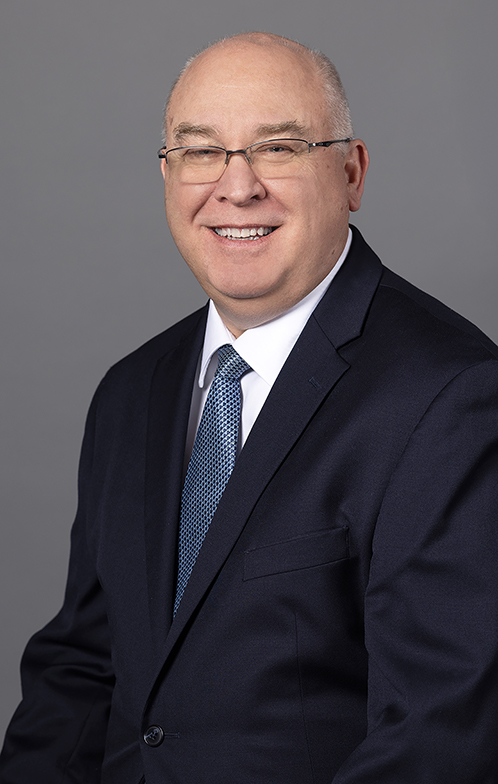
Senior Wealth Advisor


 How high earning/high net worth Gen X families can simultaneously preserve their parents’ legacy and prepare the next generation—without losing altitude.
Gen X (born 1965–1980) is often called the “sandwich generation,” squeezed between aging parents and growing kids. But that label does not capture what’s really happening. Gen X, in many cases, is a Dual Legacy Generation, helping parents navigate aging with dignity while also guiding children toward independent adulthood.
When flying commercially, airline professionals remind us to “Put on your own oxygen mask first.” From a wealth planning perspective, this advice is of equal importance. When Gen X has a clear plan for their own retirement and estate decisions, it becomes far easier to support both parents and children without feeling overwhelmed.
Many financial plans focus primarily on achieving a target retirement balance. While establishing that number is essential, it is only one component of a sound strategy. For high earning Gen X families who consistently maximize retirement contributions, the more critical question is not whether retirement is funded, but how future income will be generated and whether the plan creates unnecessary tax concentration risk.
We frequently observe that Gen X households are heavily weighted toward tax-deferred accounts. Under the SECURE Act, the Required Minimum Distributions (RMD) age is now 73 for individuals born before 1960 and 75 for those born in 1960 or later, and most non-spouse beneficiaries must fully distribute inherited retirement accounts within 10 years. Large tax-deferred balances in conjunction with the new SECURE Act rules can create elevated RMDs and accelerated taxation for heirs.
To enhance tax efficiency and long-term flexibility, we advocate intentional tax diversification across three account types:
This diversified account structure reduces reliance on any single tax regime and supports more efficient retirement income planning. When coordinated with thoughtful withdrawal strategies, beneficiary designations, and charitable planning, this approach can lower lifetime tax exposure and help avoid a “tax time bomb”1 for heirs under the SECURE Act’s 10-year distribution rule.
Roth contributions and conversions represent a strategic prepayment of taxes that can hedge against higher future marginal tax rates, reduce RMDs from pretax accounts, and lessen the impact of the SECURE Act’s 10-year rule on inherited IRAs.
Beginning in 2026, individuals age 50 or older with prior-year wages exceeding $150,000 will be required to direct 401(k) catch-up contributions to a Roth 401(k). For high-income Gen X households, this change should be viewed as an opportunity to increase tax diversification and gain Roth account exposure despite the Roth IRA contribution limits (Single filers with MAGI over $153,000 and married couples over $242,000 in 2026).2 Taxpayers under age 50 may continue to use backdoor Roth conversions, though a coordinated approach that balances pretax and Roth contributions within employer plans may provide greater long-term flexibility.
Individuals aged 55-60 with substantial tax-deferred balances should also evaluate Roth conversions during lower-income years in retirement. Partial Roth conversions can reduce future RMDs, improve after-tax income flexibility, and help lower the tax burden on heirs subject to the 10-year rule. Roth conversions may help manage future Medicare premium surcharges once RMDs begin.
Integrating tax-diversified accounts and Roth conversions into your plan allows you to intentionally structure your income in retirement, so you can choose which dollars to draw first.
According to Trust & Will, 55% of Americans have no estate plan.3 If you do not yet have one—or if yours has not been reviewed recently—consider the following core planning priorities:
With their own oxygen mask firmly in place, Gen X can support parents through these steps:
For high earning Gen X families, planning for children is less about funding education and more about preparing capable stewards of capital.
Purpose-built pools of capital can help children build understanding of financial concepts and goal planning. Each pool answers a different question and therefore should be governed accordingly.
Most wealth transfer challenges stem from unclear expectations and avoided conversations, not poor investment results. Honest conversations about values, independence, and responsibility can significantly reduce friction. Research consistently shows that parents, not schools or advisors, are the primary drivers of financial literacy.6
As children begin earning income, encourage saving and early use of Roth IRA or taxable investment accounts. Gradually shifting decision-making responsibility builds competence before significant wealth transfers occur.
Support for education, early careers, and housing should be intentional and clearly defined—not reactive. Thoughtful boundaries help liquidity, avoid premature retirement withdrawals, and reduce long-term dependence. This reinforces the oxygen mask principle: you cannot sustain others if that support undermines your own security.
Gen X holds a pivotal role in the family wealth journey. By securing retirement flexibility, estate clarity, and liquidity first, you can support your parents and prepare your children without losing altitude.
Putting on your oxygen mask first is essential. When Gen X plans proactively, complexity becomes continuity, preserving the past and strengthening what comes next.
1 Kate Dore, CFP®, EA, “Your inherited individual retirement account could trigger a ‘tax bomb’ advisor says. How to Avoid it,” CNBC, Sept. 17, 2024, cnbc.com/2024/09/17/reduce-taxes-inherited-individual-retirement-accounts.html.
2 “401(k) limit increases to $24,500 for 2026, IRA limit increases to $7,500,” Internal Revenue Service, Nov. 13, 2025, irs.gov/newsroom/401k-limit-increases-to-24500-for-2026-ira-limit-increases-to-7500.
3 “Who Has an Estate Plan? A Demographic Breakdown,” Trust and Will, Mar. 21, 2025, trustandwill.com/learn/2025-report-estate-planning-demographic-breakdown.
4 “Advance Care Planning: Advance Directive for Health Care,” National Institute on Aging, nia.nih.gov/health/advance-care-planning/advance-care-planning-advance-directives-health-care.
5 “529-to-Roth IRA Rollovers: Taking Advantage of the New Option to Move Education Savings to Retirement Savings,” Kitces, June 26, 2024, kitces.com/blog/529-to-roth-ira-rollover-retirement-saving-education-planning-secure-2-0-backdoor-roth.
6 Brittany Rogers, “Money Talks: Teaching Kids Financial Fluency,” Marriott Alumni Magazine, Summer 2024, marriott.byu.edu/magazine/feature/money-talks-teaching-kids-financial-fluency.
DISCLAIMER: The information provided in this piece should not be considered as a recommendation to buy, sell or hold any particular security. This report includes candid statements and observations regarding investment strategies, individual securities, and economic and market conditions; however, there is no guarantee that these statements, opinions, or forecasts will prove to be correct. Actual results may differ materially from those we anticipate. The views and strategies described in the piece may not be suitable to all readers and are subject to change without notice. You should not place undue reliance on forward-looking statements, which are current as of the date of this report. The information is not intended to provide and should not be relied on for accounting, legal, and tax advice or investment recommendations. Investing in stocks involves risk, including loss of principal. Past performance is not a guarantee of future results.
