
Investment Strategist


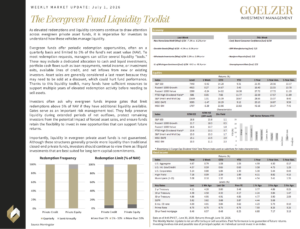 As elevated redemptions and liquidity concerns continue to draw attention across evergreen private asset funds, it is imperative for investors to understand how these vehicles manage liquidity.
Evergreen funds offer periodic redemption opportunities, often on a quarterly basis and limited to 5% of the fund’s net asset value (NAV). To meet redemption requests, managers can utilize several liquidity “tools.” These may include a dedicated allocation to cash and liquid investments, portfolio cash flows such as loan repayments, rental income, or investment exits, available lines of credit, and net inflows from new or existing investors. Asset sales are generally considered a last resort because they may need to be sold at a discount, which could hurt fund performance. Thanks to this liquidity toolkit, many funds have sufficient resources to support multiple years of elevated redemption activity before needing to sell assets.
Investors often ask why evergreen funds impose gates that limit redemptions above 5% of NAV if they have additional liquidity available. Gates serve as an important risk management tool. They help preserve liquidity during extended periods of net outflows, protect remaining investors from the potential impact of forced asset sales, and ensure funds retain the flexibility to invest in new opportunities that can support future returns.
Importantly, liquidity in evergreen private asset funds is not guaranteed. Although these structures generally provide more liquidity than traditional closed-end private funds, investors should continue to view them as illiquid investments that are best suited for long-term capital commitments.
Weekly Market Update: July 1, 2026
