
Senior Portfolio Analyst


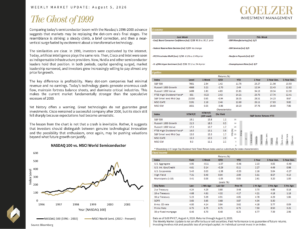 Comparing today’s semiconductor boom with the Nasdaq’s 1996-2000 advance suggests that markets may be replaying the dot-com era’s final stages. The resemblance is striking: a steady climb, a brief correction, and then a near-vertical surge fueled by excitement about a transformative technology.
The similarities are clear. In 1999, investors were captivated by the internet. Today, artificial intelligence plays the same role. Then, Cisco and Intel were seen as indispensable infrastructure providers. Now, Nvidia and other semiconductor leaders hold that position. In both periods, capital spending surged, market leadership narrowed, and investors grew increasingly willing to pay almost any price for growth.
The key difference is profitability. Many dot-com companies had minimal revenue and no earnings. Today’s technology giants generate enormous cash flow, maintain fortress balance sheets, and dominate critical industries. This makes the current market fundamentally stronger than the speculative excesses of 2000.
Yet history offers a warning. Great technologies do not guarantee great investments. Cisco remained a successful company after 2000, but its stock still fell sharply because expectations had become unrealistic.
The lesson from the chart is not that a crash is inevitable. Rather, it suggests that investors should distinguish between genuine technological innovation and the possibility that enthusiasm, once again, may be pushing valuations beyond what future growth can justify.
Weekly Market Update: August 5, 2026
